
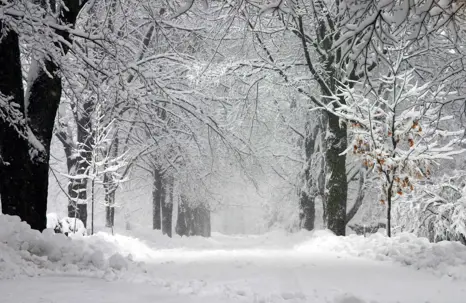
Prioritizing tree maintenance and preventive care can make a big difference in tree longevity and resilience.
Prune Trees for Health and Safety
Key Benefits of Winter Pruning:
- Reduces the risk of branch breakage
- Improves overall tree structure
- Minimizes spread of diseases
Mulch for Insulation
Benefits of Mulching:
- Insulates tree roots
- Helps retain soil moisture
- Protects from soil compaction
Protect Young Trees from Frost and Animal Damage
Benefits of Tree Wrapping:
- Protects against frost cracks
- Prevents animal damage
- Shields young bark from sunscald
Water Trees Before the Ground Freezes
Even though trees are dormant in winter, they still need adequate moisture in their root systems. Water trees thoroughly in the fall, especially during dry conditions, to help them endure the winter. Deep watering encourages strong root development and helps trees retain moisture during cold months when they can’t absorb as much from frozen ground.
Tips for Fall Watering:
- Water early in the day to prevent overnight freezing
- Use a soaker hose for deep, even saturation
- Focus on newly planted or young trees
Inspect for Pest and Disease Issues
While winter may reduce pest populations, some insects, like emerald ash borer and scale insects, can still cause damage during colder months. Inspect trees for signs of pest infestation or disease before winter, as untreated issues can weaken trees and make them more vulnerable. Tree health assessments by certified arborists can be particularly useful for spotting early signs of trouble.
Common Winter Tree Pests:
- Emerald ash borer
- Scale insects
- Aphids
Prepare for Snow and Ice Management
Snow and ice buildup can put a tremendous strain on tree branches. Large limbs may break under the weight, causing damage to the tree and posing safety risks. It’s helpful to clear snow from tree branches after heavy storms, but avoid using salt or other de-icing chemicals, as these can harm trees. Instead, gently brush off snow with a broom to avoid damaging branches.
Dealing with Snow and Ice:
- Avoid shaking branches to remove snow, as this can cause breakage
- Brush off excess snow gently
- Use caution when working around icy branches
Apply Anti-Desiccant Spray to Evergreens
Evergreen trees, such as pine and spruce, are particularly susceptible to winter desiccation, or moisture loss. Applying an anti-desiccant spray in late fall can help reduce moisture loss from foliage. This treatment creates a protective layer on evergreen needles, preventing excess water from escaping and helping the tree stay hydrated during winter.
Advantages of Anti-Desiccant Spray:
- Reduces winter desiccation
- Protects evergreen needles from drying out
- Supports tree health in cold weather
Prune and Trim Dead or Dying Branches
Clearing out dead or dying branches before winter hits is essential for tree health and safety. Weak branches are more likely to snap under snow or ice weight, which can damage the tree and create hazards. A qualified arborist can assist in safely removing problem branches, ensuring that trees are structurally sound for winter.
Benefits of Dead Branch Removal:
- Reduces winter breakage risks
- Helps prevent disease spread
- Improves tree aesthetics and structure
Prepare Trees for Salt Exposure
In Pennsylvania, road salt is commonly used for de-icing, which can harm trees when it seeps into the soil. To prevent salt damage, consider using salt-tolerant plants or barriers around trees near roadways or sidewalks. Rinsing off salt after winter can also help minimize long-term soil damage.
Tips for Salt Protection:
- Use burlap or fencing as a barrier
- Rinse salt off in spring
- Apply gypsum to neutralize soil if needed
Schedule a Winter Tree Inspection
A professional winter tree inspection is one of the best ways to ensure your trees are prepared for the cold season. An arborist can assess tree health, recommend treatments, and identify any potential hazards that may need to be addressed before heavy snowfall.
Reasons for Winter Tree Inspections:
- Early detection of pests and diseases
- Assessment of structural integrity
- Personalized winter care recommendations